Analyzing Ethics in Action
In our Com 563 Ethics course, in the Spring of 2025, we examined how real-world ethical dilemmas test the delicate balance between corporate responsibility and public trust, and where strategic communication fits into that equation. For my final ethics project, I selected the Piccolo vs. Disney lawsuit as my case study, which, at the time, had captured national attention for its implications in public discourse, corporate governance, and organizational integrity for a very beloved brand.
This project required me to look beyond surface-level analysis and ask deeper questions, such as not only what happened, but also why it happened and how Disney could have responded more effectively. Through comprehensive research, theoretical application, and ethical evaluation, I analyzed the principles at play and identified ways transparent communication might have mitigated the public backlash directed at Disney.
Purpose and Context
The goal of this project was to apply ethical theories to a real-world communication crisis, demonstrating how established frameworks can guide professional decision-making under pressure. The assignment required us to identify the ethical challenges within a public case, assess the organization’s communication strategy, and evaluate its alignment with recognized moral principles.
I chose the Disney lawsuit because it represented a multifaceted ethical scenario that intertwined questions of corporate governance, ambiguous legal language, stakeholder trust, and brand reputation. Disney’s legal dispute revealed tensions between corporate responsibility and public accountability.
By studying this case, I sought to understand how a company with a globally trusted, family-oriented brand navigates ethical decision-making under both legal and social pressure and what lessons communicators can draw from both its strategies and missteps
Research and Framework
Before writing the analysis, I conducted background research using credible sources. I reviewed timelines from both Disney and the plaintiff to understand the sequence of events and the evolution of the lawsuit.
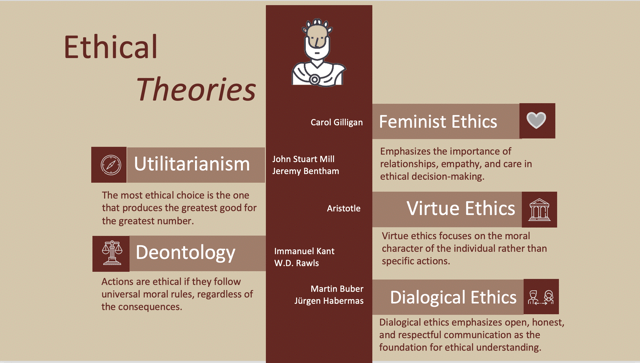
The ethical evaluation drew on the foundational theories of Utilitarianism, Deontology, Feminist Ethics, Virtue Ethics, and Dialogical Ethics to assess whether Disney’s actions aligned with each theory. These frameworks provided structure and philosophical depth to the analysis, allowing us to move beyond surface-level debate and explore the moral reasoning behind organizational decisions.
Process and Collaboration
The project followed a structured process similar to a professional ethics review.
- Case Selection and Research
We began by identifying potential cases with ethical relevance and media visibility. The Disney lawsuit stood out due to its complexity and real-time developments. - Information Gathering
Using reputable news outlets, I compiled research representing multiple perspectives. This included Disney’s official statements, Florida legislative documents, and commentary from the plantiff and general public. - Application of Ethical Theories
The case was analyzed through different ethical lenses, and then merged these analyses to form a cohesive narrative. This step highlighted how different moral philosophies can produce varying interpretations of the same event. Though, in this case, almost all of them pointed to the same outcome. - Synthesis and Presentation
The summary and presentation reflected how each decision of the actors aligned with the tenets of each ethical framework.
Findings and Key Insights
Over the course of the project, the analysis revealed several central themes.
- Ethics and Reputation Are Intertwined. Disney’s public image as a values-driven company amplified scrutiny of its actions. Ethical consistency became both a moral and strategic necessity.
- The lawsuit blurred boundaries between public opinion and corporate advocacy, revealing how ethical decision-making becomes more complex when intertwined with policy disputes.
- Communication Defines Perception. How Disney framed its narrative shaped how stakeholders perceived its integrity. The tone, transparency, and timing of its responses all contributed to public backlash.
Ultimately, the conclusion was that Disney’s approach embodied both ethical weaknesses and strategic challenges. While the company acted to defend its actions, it also faced questions about fairness, greed, and broken trust.
Lessons Learned
This project provided valuable lessons about the intersection of ethics, communication, and perceived power. Abstract frameworks gain real meaning when applied to modern corporate dilemmas. Transparency and authenticity win over persuasion or hidden truth in ethical crises. And, finally, ethical leadership means acknowledging complexity and striving for fairness.
Reflection and Relevance
Until this course, I had made it through both my academic and professional careers without ever taking an ethics course. From our readings, I learned quite a bit. I will admit some of the readings were quite frustrating, such as labeling all women mentally unstable because they did not fall into a rigid male view of virtue. But, luckily for the world, writers such Carol Gilligan conducted further research and developed the ethics of care.
Analyzing the Disney lawsuit reminded me that ethical communication is not an academic exercise, but a daily practice. Whether in public relations, corporate strategy, or policymaking, communicators shape narratives that influence trust and behavior.
This project underscored why ethics must be foundational to all strategic communication work. A company’s reputation is built not only on its creativity or market success, but on the consistency of its values when tested under pressure.
Looking forward, I hope to carry these lessons into my professional life—continuing to advocate for ethical transparency, fairness, and empathy in every form of communication. The Disney case will remain a reminder that even the world’s most powerful brands must continually earn public trust through integrity and openness.
 Strategic Storytelling